“Trauma-informed.”
It sounds reassuring, compassionate, and modern. For clients scrolling through therapist bios, those two words can feel like a lifeline: Finally, someone who understands trauma.
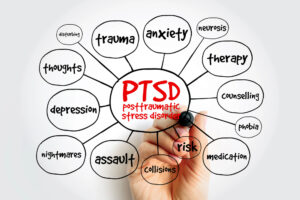 A both a trained counsellor and a consumer of counselling, I’ve been concerned with the use of the term “trauma informed counselling.
While attending a presentation on mental health, I became informed that the term “traum informed” means that the counsellor is aware that clients coming into session with problems may have had previous trauma that is impacting their daily life. Full stop. It is simply a statement of that awareness. It does not mean that the counsellor has had extensive training or even basic training in guiding a client through the healing process that is unique to Complex Post Traumatic Stress Disorder or even PTSD.
In my own healing, no counsellor talked about vagus nerve calming techniques, body awareness focusing, nor did I hear about focusing on deep nose breathing rather than shallow mouth breathing, which lowered my blood pressure a full twenty points, all of which I learned through Tiktok videos.
But when “trauma-informed” becomes a marketing badge instead of a genuine clinical stance, it stops being comforting and starts becoming ethically dangerous.
This article takes a critical look at what can go wrong—especially for clients—when counsellors and agencies casually claim to be “trauma-informed.”
The Rise of Trauma Branding
Over the last decade, “trauma” has moved from clinical textbooks into everyday language. Social media, self-help culture, and therapy marketing have all embraced terms like “trauma”, “triggered”, “inner child”, “nervous system regulation”, and “somatic healing”.
Therapists and agencies know that many clients have histories of abuse, neglect, bullying, systemic oppression, or medical and relational trauma. So adding “trauma-informed” to a website or brochure has become almost a default move. It signals that the client is safe, that the counsellor will “get their trauma” and that the counsellor is well trained and competent at handling deep pain and can offer techniques to resolve it.
However, in many situations, “trauma-informed” is not a protected, regulated, or clearly defined professional title. You don’t need advanced specialization or rigorous supervision to use it. Sometimes you just need a weekend webinar and good website copywriting.
That’s where the trouble starts.

Ethical Issue #1: Misleading Claims of Competence
Professional ethics codes in counselling and psychology usually agree on one core point:
“Don’t pretend to have expertise you don’t actually have.”
Yet “trauma-informed” is often used in exactly that way.
– A therapist reads one book and updates their profile.
– A clinic sends staff to a 3-hour “trauma training” and suddenly brands the entire agency as trauma-informed.
– Social-media therapists fold “trauma-informed” into their bio because it boosts engagement.
For clients, this can be dangerous. A person may disclose childhood abuse, sexual assault, or complex developmental trauma assuming they’re in the hands of a specialist—when in reality they’re not.
Even if the counsellor is well-intentioned, inflating competence violates ethical duties of honesty and transparency, and it undermines informed consent. Clients can’t truly consent to treatment if they are misled about the therapist’s level of skill.
Ethical Issue #2: Working Far Beyond Scope of Practice
Real trauma work can be technically complex and emotionally intense. It may involve:
– Dissociation and “parts”
– Complex PTSD
– Self-harm, suicidality, addictive coping
– Somatic flashbacks
– Unsafe environments and ongoing abuse
A therapist whose trauma education consists of a few CE hours might still:
– Dive into detailed trauma narratives too quickly
– Use techniques (e.g., EMDR-style protocols, exposure-like work) without proper training
– Encourage cathartic emotional expression with no stabilization or aftercare
The result? The client’s symptoms can worsen: more flashbacks, more nightmares, more dissociation, more self-blame.
Ethically, this raises serious questions:
– Competence: Are you practising within your actual training and experience?
– Duty of care: Are you taking reasonable steps to prevent foreseeable harm?
Calling yourself “trauma-informed” doesn’t magically grant the skills required to handle the fallout if a client destabilizes.
## Ethical Issue #3: Retraumatization in the Therapy Room
There’s a painful irony here:
Some of the worst retraumatization happens inside spaces that are marketed as trauma-informed.
It doesn’t always look dramatic. It might be:
– Subtle disbelief: “Are you sure it was really abuse?”
– Minimization: “Lots of people go through that and turn out fine.”
– Pressure: “You need to tell me the whole story if you want to heal.”
– Pathologizing: “You’re overreacting; that wasn’t trauma.”
In a session with one counsellor, after describing what I was going through, the counsellor replied “Oh my god! This is terrible! Have you bought a lottery ticket?” leaving me in shock.
Another counsellor, with whom I had shared my traumatic story of false allegations, ended the session with “yeah, they said you caused them to spend $50 in legal fees” with a chuckle, not realizing the retriggering impact of the comment
When a therapist does this, especially under the banner of being “trauma-informed,” it cuts deep. Clients may think:
– “Wow, they just don’t get it. I need a different counsellor”
– “If even a trauma specialist thinks I’m too much, it must really be me.”
– “If I can’t heal even here, I’m hopeless.”
Ethically, this collides with nonmaleficence (do no harm) and respect for client dignity. You can’t declare yourself trauma-informed and then disregard the core principle of making the relationship safe, validating, and collaborative.
## Ethical Issue #4: Over-Pathologizing and the Trauma Identity Trap
Another subtle but important ethical problem:
When everything becomes “trauma,” nothing is clearly defined anymore.
Some practitioners label:
– Stress as trauma
– Normal grief as trauma
– Everyday conflict as trauma
Of course, some experiences that look “ordinary” on the surface are deeply traumatic underneath. But if a counsellor reflexively slaps the “trauma” label on every struggle, clients may be nudged into over-identifying with a trauma identity:
“I am my trauma.”
“Everything wrong in my life is trauma.”
“I’m damaged at the core.”
That might be good for long-term client retention, but it’s not necessarily good for client autonomy and empowerment.
Ethically, therapists are supposed to **promote strengths, agency, and realistic hope.** Over-pathologizing can undermine this by making people feel permanently broken instead of normally human and capable of growth.
## Ethical Issue #5: Ignoring Social and Systemic Trauma
A truly trauma-informed approach should recognize that trauma is not just individual; it is often:
– racialized
– gendered
– classed
– shaped by colonization, war, displacement, and systemic violence
Yet some “trauma-informed” counsellors focus exclusively on inner beliefs and nervous system regulation while glossing over concrete realities:
– Poverty
– Racism and discrimination
– Housing insecurity
– Ableism, homophobia, transphobia
– Exploitative workplaces
The unspoken message becomes:
“Your suffering is mostly about your nervous system, not your actual circumstances.”
Ethically, this can be a kind of subtle gaslighting. It ignores justice, cultural competence, and the impact of real-world power. For clients, it can feel like being blamed for not “regulating” well enough in a system that is actually hurting them.
## Ethical Issue #6: Boundary Blurring Disguised as “Trauma Care”
Trauma often involves attachment wounds. That means counsellors working with trauma must guard their boundaries carefully and clearly.
But sometimes, the opposite happens:
– Therapists offer excessive availability (late-night texting, long personal messages, “emergency” calls with no structure).
– Counsellors over-share their own trauma story to “bond” with the client.
– The relationship drifts toward friendship or dependency, framed as “attachment repair.”
Clients may feel special, deeply seen, or “saved” — until the inevitable limit appears (burnout, vacation, schedule change, or termination). Then the client can be left feeling abandoned and retraumatized.
From an ethical standpoint, this is about:
– Boundary management
– Avoiding exploitation of vulnerability
– Being honest about what the relationship is and isn’t
You cannot ethically trade on someone’s trauma history to create a powerful emotional bond that you then cannot responsibly maintain.
## Ethical Issue #7: Informed Consent, Safety, and Confidentiality
Trauma survivors often have a heightened need for safety and clarity. A trauma-informed counsellor should be *especially* transparent about:
– Limits of confidentiality (duty to warn, duty to report, child protection laws, etc.)
– What happens if a client discloses suicidal thoughts, active abuse, or danger to others
– What crisis planning and support look like
When counsellors gloss over these details, clients may share things under a mistaken assumption of total secrecy. If a report must be made, the client can feel betrayed and exposed.
The ethical obligation here is straightforward: **informed consent must be real, not symbolic**. A trauma-informed label means nothing if clients don’t fully understand the legal and ethical boundaries around their disclosures.
—
## Ethical Issue #8: “Trauma-Washing” in Agencies and Systems
It’s not just individual therapists. Entire organizations now brand themselves as “trauma-informed”:
– Hospitals
– Schools
– Non-profits
– Government programs
Sometimes these systems implement real, meaningful changes. But other times, “trauma-informed” is little more than trauma-washing:
– Staff attend a one-off training.
– Posters go up with gentle language.
– The website gets updated.
Meanwhile:
– Intake remains cold and bureaucratic.
– Waiting rooms are chaotic, noisy, and unsafe.
– Policies are rigid, invalidating, or shaming.
– Clients still feel rushed, dismissed, or reduced to checkboxes.
For clients, this mismatch between branding and reality can be deeply disorienting. If even a “trauma-informed” system feels punishing or indifferent, the conclusion is often:
“The problem must be me.”
In ethical terms, this is misrepresentation on an institutional scale.
—
## So What Should Trauma-Informed Actually Mean?
If the term is going to be used at all, it should mean more than soothing language and Instagrammable quotes.
At minimum, a genuinely trauma-informed practitioner or service should:
- Be transparent
– Clear about training, limitations, and what they don’t do.
– Honest about what clients can realistically expect. - Prioritize safety and collaboration
– Go at a pace jointly decided with the client.
– Respect “no” and “not yet” when it comes to processing traumatic memories. - Have real training and supervision
– Ongoing learning about trauma, not just a one-time seminar.
– Regular case consultation for complex situations. - Understand systems and context
– Recognize the roles of racism, sexism, poverty, disability, and other structural harms.
– Avoid blaming individuals for suffering that is rooted in unjust conditions. - Maintain clear boundaries
– Warmth and humanity, yes.
– But with professional clarity about roles, availability, and endings. - Share power
– View clients as experts in their own lived experience.
– Avoid imposing a single narrative of what “healing” must look like.
## Questions Clients Can Ask Before Trusting the Label
If you’re a client or advocate, here are some simple but powerful questions to ask any counsellor who calls themselves “trauma-informed”:
– “What specific training and experience do you have in working with trauma?”
– “How do you decide when it’s safe to go into trauma memories and when to focus on stabilization?”
– “What happens if I feel overwhelmed or dissociate in session?”
– “How do you account for things like racism, sexism, poverty, or homophobia in understanding trauma?”
– “What are your limits of confidentiality?”
– “How available are you between sessions, and in what ways?”
A grounded, genuinely trauma-informed counsellor will be able to answer these calmly and concretely. If the response is vague buzzwords, defensiveness, or irritation, that’s important data.
—
## Final Thoughts: Trauma-Informed or Trauma-Branded?
At its best, trauma-informed practice is about:
– respecting the nervous system,
– understanding the impact of overwhelming experiences,
– honouring survival strategies,
– and creating relationships that are consistently safe, honest, and empowering.
At its worst, “trauma-informed” becomes just another label to sell services, trapping clients in unsafe dynamics under the illusion of specialized care.
The solution is not to abandon trauma language altogether, but to reclaim it:
– Clients deserve transparency, not marketing spin.
– Counsellors deserve to be honest about their limits rather than hiding behind buzzwords.
– Systems deserve to be held accountable for the difference between what they say and how they actually operate.
If we’re going to keep using the word “trauma-informed,” we owe it to survivors to make sure it means something real.